|
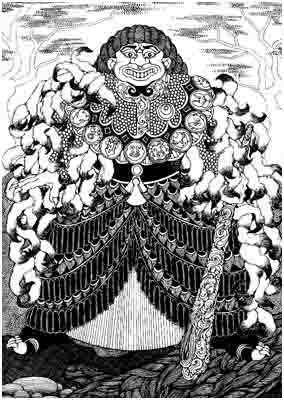
A god of nature, Humbaba's forests stretched many leagues. Not
necessarily an evil deity, he was described in The Epic of Gilgamesh
as being able to roar above the elements, breathe fire and having the
visage of death. Early representations suggest that his features were
inspired by the convoluted tract of the human intestine.
In The Epic of Gilgamesh the King of Uruk, Gilgamesh, befriended Enkldu,
a wild man. Although Enkidu and many others tried to dissuade Gilgamesh
from setting out to do combat with Humbaba, Enkidu gave in and accompanied
him on the journey.
When the two companions pushed open the gates which guarded Humbaba's
forest Enkidu ominously felt the strength leave him. He and Gilgamesh
summoned Humbaba by felling some of his cedars and, with the aid of
the gods, Humbaba was defeated. Gilgamesh wished to spare his life,
but Enkidu urged him not to.
Gilgamesh slew Humbaba, angering Enlil, god of all elements.
Later, Gilgamesh killed the Bull of Heaven sent by lshtar to punish
him for spurning her. In revenge, and for destroying Humbaba, the gods
decided that Enkidu should die.
The location of Humbaba’s fabulous forest of cedars is not exactly
known. It was probable the Babylonians lacked wood for building materials
and kings like Gilgamesh, who was famous for his building feats, would
have needed to search far afield for it.
|